Wednesday, November 24, 2010

Thanksgiving


What is the price of experience? Do men buy it for a song?

Or wisdom for a dance in the street? No, it is bought with the price
Of all a man hath, his house, his wife, his children.
Wisdom is sold in the desolate market where none come to buy,
And in the wither’d field where the farmer plows for bread in vain.It is an easy thing to triumph in the summer’s sun
And in the vintage and to sing on the waggon loaded with corn.
It is an easy thing to talk of prudence to the afflicted,
To speak the laws of prudence to the houseless wanderer,
To listen to the hungry raven’s cry in wintry season
When the red blood is fill’d with wine and with the marrow of lambs.


It is an easy thing to laugh at wrathful elements,
To hear the dog howl at the wintry door, the ox in the slaughterhouse moan;
To see a god on every wind and a blessing on every blast;
To hear sounds of love in the thunder-storm and destroys our enemies’ house;
To rejoice in the blight that covers his field, and the sickness that cuts off his children,
While our olive and vine sing and laugh round our door, and our children bring fruits and flowers.


Then the groan and the dolour are quite forgotten, and the slave grinding at the mill,
And the captive in chains, and the poor in the prison, and the soldier in the field
When the shatter’d bone hath laid him groaning among the happier dead.
It is an easy thing to rejoice in the tents of prosperity:
Thus could I sing and thus rejoice: but it is not so with me.

William Blake "The For Zoas - Night the Second pages 32 and 33.


Sunday, November 14, 2010

Mind grown venerable in the unreal

Goodbye to summer. Blake, King James, Wallace Stevens, Bingham Hill, south east of La Porte, Colorado.


Where wast thou when I laid the foundations of the earth? declare, if thou hast understanding.
Who hath laid the measures thereof, if thou knowest? or who hath stretched the line upon it?
Whereupon are the foundations thereof fastened? or who laid the corner stone thereof;
When the morning stars sang together, and all the sons of God shouted for joy?

Job 38:7 - King James


The trumpet of morning blows in the clouds and through
The sky.  It is the visible announced,
It is the more than visible, the more
Than sharp, illustrious scene.  The trumpet cries
This is the successor of the invisible.

This is its substitute in stratagems
Of the spirit.  This, in sight and memory,
Must take its place, as what is possible
replaces what is not.  The resounding cry
Is like ten thousand tumblers, tumbling down

To share the day.  The Trumpet supposes that
A mind exists, aware of division, aware 
Of its cry as clarion, its diction's way 
As that of a personage in a multitude:
Man's mind grown venerable in the unreal.

Credences of Summer - Canto VII  Wallace Stevens

Saturday, November 13, 2010

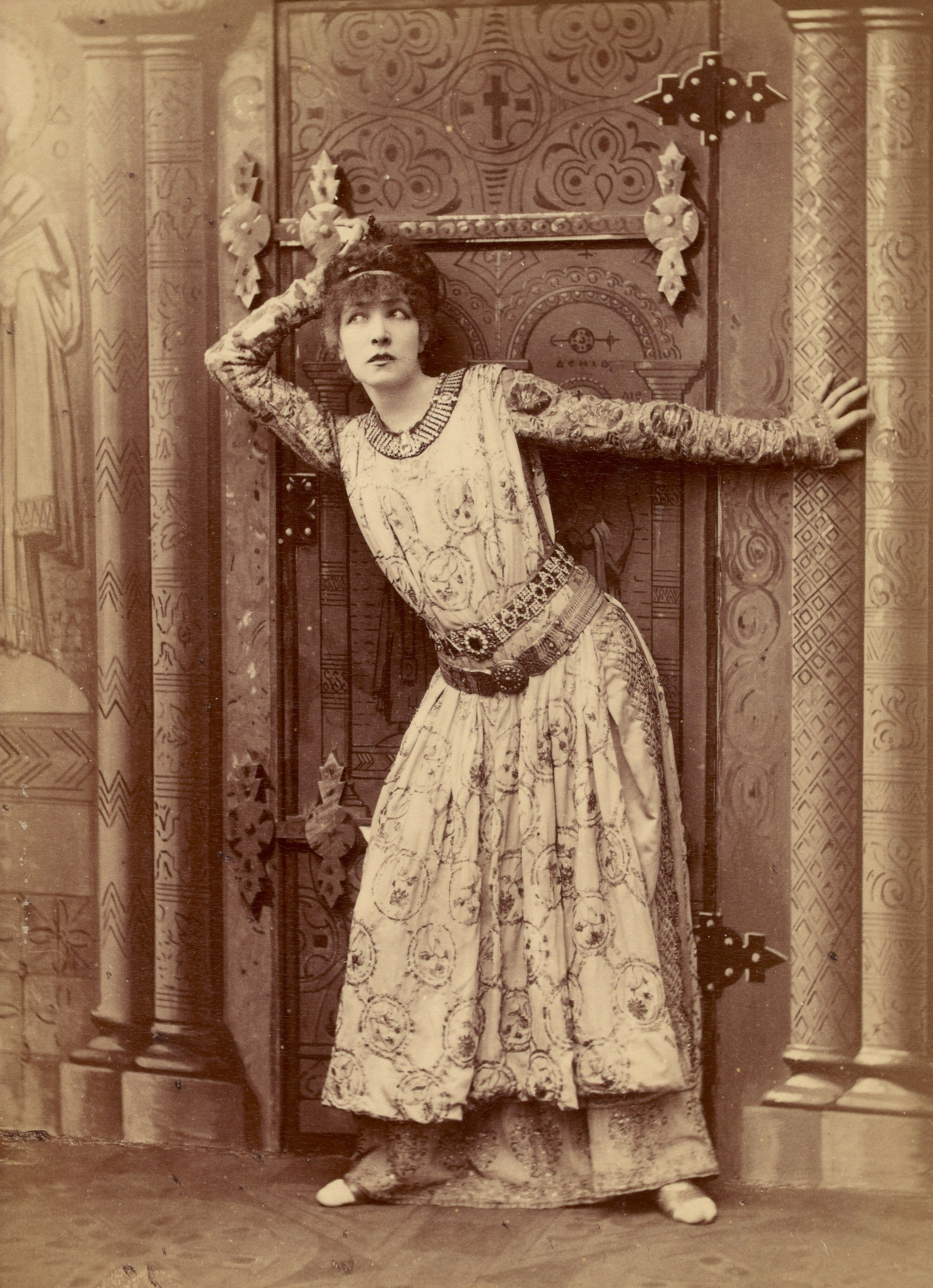
Narcissist's America - The Divine Sarah


I was thinking about the former half-term governor of Alaska and for some reason the concept of narcissism came to mind. You can look it up!   Then I ran across Terry Castle's great essay on the long dead actress Sarah Berhnhardt.

Any discussion about "Hysterical Exhibitionism" and "Narcissistic Wish-Fulfillment" and "Sartorial Perversions" can't help but remind one of our Divine Sarah.  Alas, the essay is behind their pay wall, that is, it's for subscribers only.  However, you can read her great post about Georgia O'Keefe for free.  Since it's also about her mom, it might make good reading for holiday travels.

Monday, November 1, 2010

Beethoven, Takacs and the Genetic Fallacy


Sunday, October 31st the following took place at CU:


"Quartet
by David Lawrence Morse


In this exciting new drama, brought to the stage by the Takacs Quartet and Colorado Shakespeare Festival, Beethoven rises above illness and tortured relationships to compose his most sublime music.  The drama explores the circumstances surrounding Beethoven's composition of the late quartets, integrating musical examples performed by the Takács. Following the drama, the quartet performs Beethoven's 
& nbsp;
String Quartet in A-Minor, Op. 132."


What this meant in practice was that for almost an hour and a half four actors narrated the story of Beethoven's last years and the circumstances surrounding his final compositions.  This was done in excessive detail, including, for example, the composers arguments with his copyists.  Mainly, however, it concerned his unhappy relations with his nephew and his vexed business dealings.  Plus his deafness, health problems, general cantankerousness and apparently squalid hygiene.  At various points, snippets of the compositions being discussed were played.

The volume of biographical detail was numbing and, as far as I can remember, seemed accurate enough.   It became, alas, interminable.  The portrait that emerged was of a very unhappy man, incapable of taking care of himself,  desperately lonely, abandoned to live in filth, his music the expression of a kind of inspired mania verging on madness.   

Assuming that this was true -- and there are reasons to doubt it -- how does knowing these details help us "understand" his music?  It certainly doesn't constitute music criticism.  Rather, its voyeurism. 


In fact, it diminishes the music, turning it into a kind of soundtrack for pathologies or of some sort of aesthetic of triumph over the sufferings of life through art. 
But the outer circumstances tell us almost nothing about the work.  The late quartets are exceptional on every possible level, but I especially admire a craftsmanship which has very little to do with "inspiration" and "genius", much less "the sublime", and everything to do with knowledge and diligence and hard work.  The shear elegance and ease of the part writing is amazing.  Even watching it being played, it's hard to understand how so much could be brought of four instruments with sixteen strings and four bows.

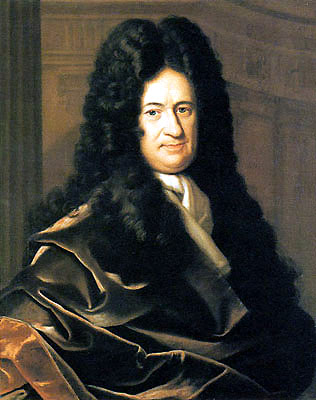
For an artist like Beethoven, the work was the life.  We should no more look his diet (or anything else) to explain his music than we should look to Liebniz' arthritis to explain the calculus


This is of course not to say the music is the same as mathematics.   The A minor Quartet is personal and stunningly intimate, but it's also bardic and mythic.  There are many ways music conveys meaning.  It's capable of irony, e.g., the little minuet that stage band plays in Don Giovanni.  It's also capable of literal mimesis.  After all imitation is an essential formal tool and the essence of counterpoint.  But it's also capable of literal mimesis, as in the Pastoral Symphony with its bird calls and thunder storms.  


One could argue the the Molto Adagio, played with great restraint and delicacy the the Takscs, incarnates in it's simple ABABA form the an alternation between the timeless - the Lydian chorale - and personal historic time -- the D major second subject.


D major is of course the key of the 6th Symphony.  Maynard Solomon in his Late Beethoven: Music, Thought, Imagination, argues the the seeds of the late style are to be found in Beethoven's pastoral and rustic works, not in the major works of his heroic style.  He singles out the 7th Symphony, the Op 96 Violin Sonata and the Archduke Trio as examples  - one might also mention any number of the less famous piano sonatas.  The late works should be seen not as examples of some triumph of the will but as contemplations of musical expression, meditations on form, the animal delight of virtuosity, the joke, the dance, the elegy , ineluctable fate and the nature of time: human, divine and musical.


Sunday, October 17, 2010

Goodman Woodman and Humiliation Scratcher


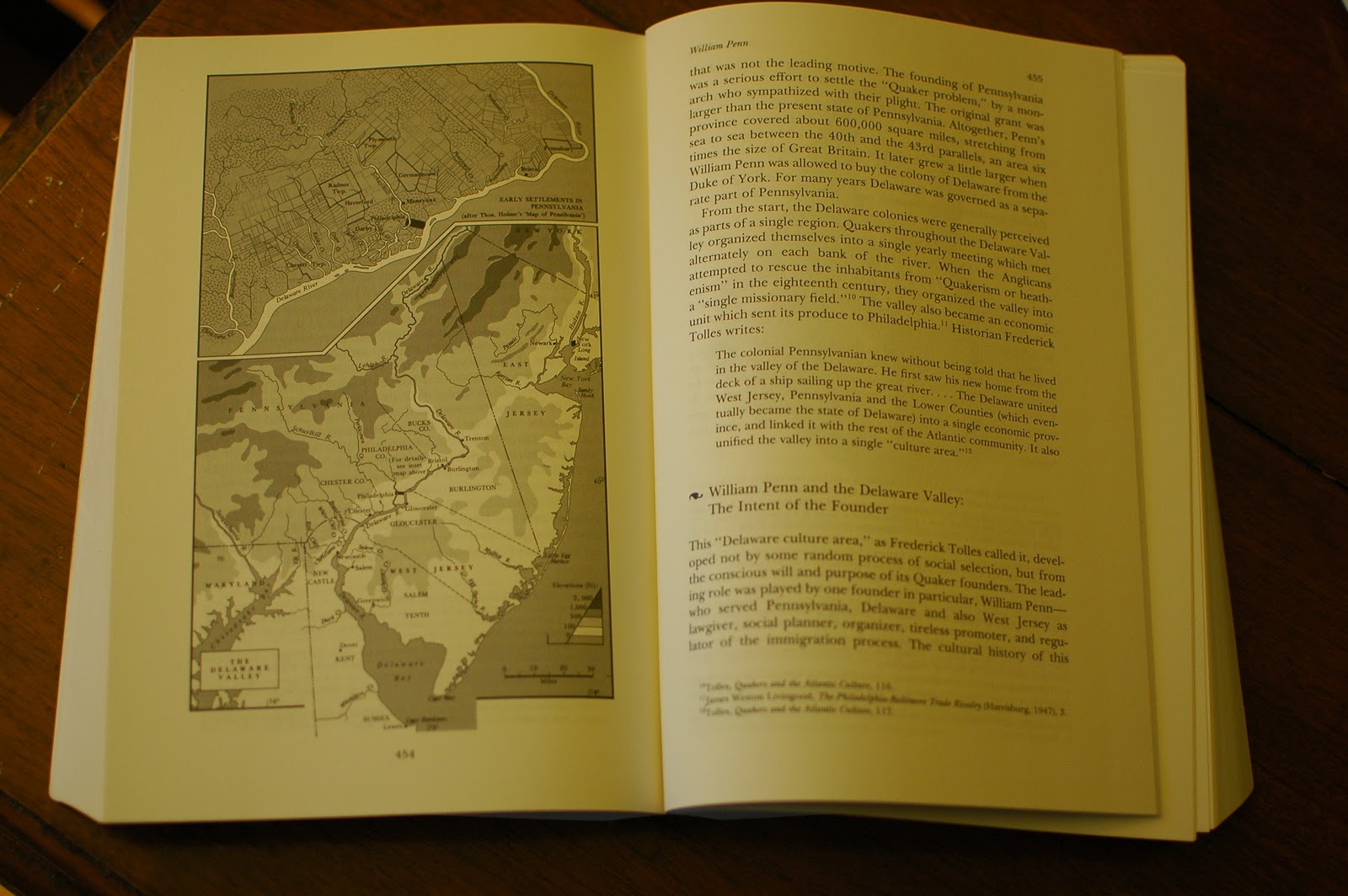
Being a contrarian and something of a miserabilist my summer reading tends towards the weighty and obscure.  This summer it included  Albion's Seed, Four British Folkways in America a 900 page cultural history of English speaking colonial America by David Hackett Fisher.  The four folkways are chronologically the Puritians, what he calls the "Cavaliers" in Virginia and the Chesapeake/Virginia tidewaters, the Quakers in Pennsylvania and the Scots-Irish in Appalachia.  For each group he discusses speech, building, family, marriage, gender, sex, child rearing, naming, aging, death, religion, magic, learning, food, dress, sports, work, time, wealth, rank, social practice, government, power and freedom.

It's a huge undertaking.  Plus, it's a real book.  All the scholarly material is in actual footnotes which sometimes go on for pages and contain charts and graphs.  And there are maps -detailed demographic maps - and drawings of people and their clothes and their houses.

In some ways, all this work reinforces regional stereotypes and traces them back to their origins in 17th century England.  One thing is quite clear: these people hated each other in England and hated each other after they got here.  Since reading Hackett I've started to think of the American Civil War as a continuation of the English one: the English aristocracy came to Virginia explicitly to escape the Puritans in England just as the Puritans had come to the New World to escape them.  Puritans in Massachusetts went back to England to fight alongside Cromwell against the Anglicans.  So civil war seemed built into America's cultural DNA far before the rise of slavery and race-based ideologies, its roots being both religious and cultural.

Further, if you want to understand the Tea Party, don't think about the original one in Boston.  The New England Puritans certainly weren't anti-government and anti-tax.  Think of the Whiskey Rebellion.  If you want to understand Sarah Palin, think of Andrew Jackson.

I especially liked the Puritan onomastics (systems of naming).  Referring to Sussex England, source of many Puritan families, Hackett writes:

"Sussex Puritans made heavy use of hortatory names such as Be-courteous Cole... Safely-on-high Snat, Fight-the-good-fight-of-faith White... Humiliation Scratcher... and Mortify Hicks.  A classic example was an unfortunate young woman name I-fly-fornication Bull of Hailsham, Sussex, who was made pregnant in the shop of a yeoman improbably called Goodman Woodman."

This was rather specific to Sussex and didn't really take in New England, which I think is a shame.  However, they did use necronyms:  if a child died the next child of the same sex was given its name.

In any case, he then traces internal migration in the US over the past 300 years and voting patterns associated with each group.  Well into the 19th century, European visitors commented that the regional differences in the US were greater than those in any one European country.  The disparities in per capita income between New England and the mountain South were greater than those between Germany and Russia as late as the 1880s.

In addition, every president except two has come from one of these groups.  Although one could argue the Roosevelt doesn't fit because his name is Dutch.  The two presidents?   Kennedy - Irish Catholic, and the current occupant of the White House.

Tuesday, June 15, 2010

Colorado Music Festival 2010


The Colorado Music Festival starts June 27th and concludes on August 6th.  The web site is here and is an unattractive mess.   

This year we get: Pictures at an Exhibition, The Grand Canyon Suite, a “New Year’s Style Night in Vienna,” “A Symphonic Tribute to Great American Pops Composers,” a tango concert and five evenings of “world music.”

In the middle, there’s a “Brahms Festival.”  Over eight days you can hear all four symphonies, two of the serenades and all of the concertos, including the Double Concerto.    

The soloist in the D-minor concerto will be Peter Serkin, a major international artist --  absolutely worth hearing, although we did just have an outstanding performance of the work by Christopher Taylor with the Boulder Philharmonic.  Valentina Listisa is playing the B-flat concerto, and she seems to be a rising star.

On July 29th and 30th, Jane Eaglen will sing the Liebestod  followed by Loren Maazel’s Wagner arrangement “The Ring Without Words.”  Jane Eaglen has had vocal problems lately, but hopefully she’s doing well now.   If so, why fly her out to sing for ten minutes?

On August 1st, we can hear Golijov’s  klezmer-flavored Dreams of Issac the Blind and the Bruckner D minor Requiem  -- which might not be as incongruous as it sounds.  

It all winds up on August 5th and 6th with Mahler’s Fifth, prefaced by something involving didgeridoo and electric guitar.  (I would have programmed the klezmer with the Mahler, naturally.)

So it’s another strange season for the CMF: ADHD programming, probably 50% pops or straight out pop.  Apparently this works for them in terms of ticket sales. 

2008’s Beethoven festival drew well, although the performances were inconsistent and inconsistently prepared.  So this year, we get a five all Brahms concerts in a row.

This is of course the bicentenary for both Schuman and Chopin.  Schumann is represented on the Vienna New Year’s program with the “Konzertstuck for Four Horns and Orchestra”, but that’s because it was Michael Christie’s premier piece with the CMF.  Otherwise, nothing from either.  Given the close relationship between Brahms and Schumann, perhaps an evening representing both of them would have been in order.

In the early days of the CMF, Tuesday nights were given over to chamber performances featuring members of the orchestra and occasional guest artists. This has been completely eliminated, although there are two Wednesday “Chamber Music at the Yard” programs.  No details available.

You can view schedule of this puzzling season  here.

Saturday, May 29, 2010

Wagner and the Munchkins

Saturday afternoon and Siruis Met radio is playing a wonderful 1995 Meistersinger: Levine; Weikl, Heppner, Matilla.  Rene Papa was the Night Watchman.  So he would have been 31.

Anyway, we're not at the start of Act III, Scene 2, where all the various guilds make their entrance.  And it strikes me how very much like the scene with the Munchkins in the Wizard of Oz.  I wonder if Harburg and Arlen were conscious of this.

Die Meistersinger is very long.  When I saw it at the Met over Thanksgiving weekend right after 9/11, many people left immediately after the great quintet at the end of the first scene of the last act.  I hadn't anticipated how overwhelming all the stuff about "holy German art" would be.

Meistersinger is an exceptional work of art, but like others, I too wish it had ended without all the bombast.

The normal thing would be embed the terrifying 1924 Furtwangler Prelude to Act I.  Instead, here's the cast I saw that evening in New York - Pape, who was Pogner in this production is not in this scene: